What is the long arc of the Scottish Imagination?
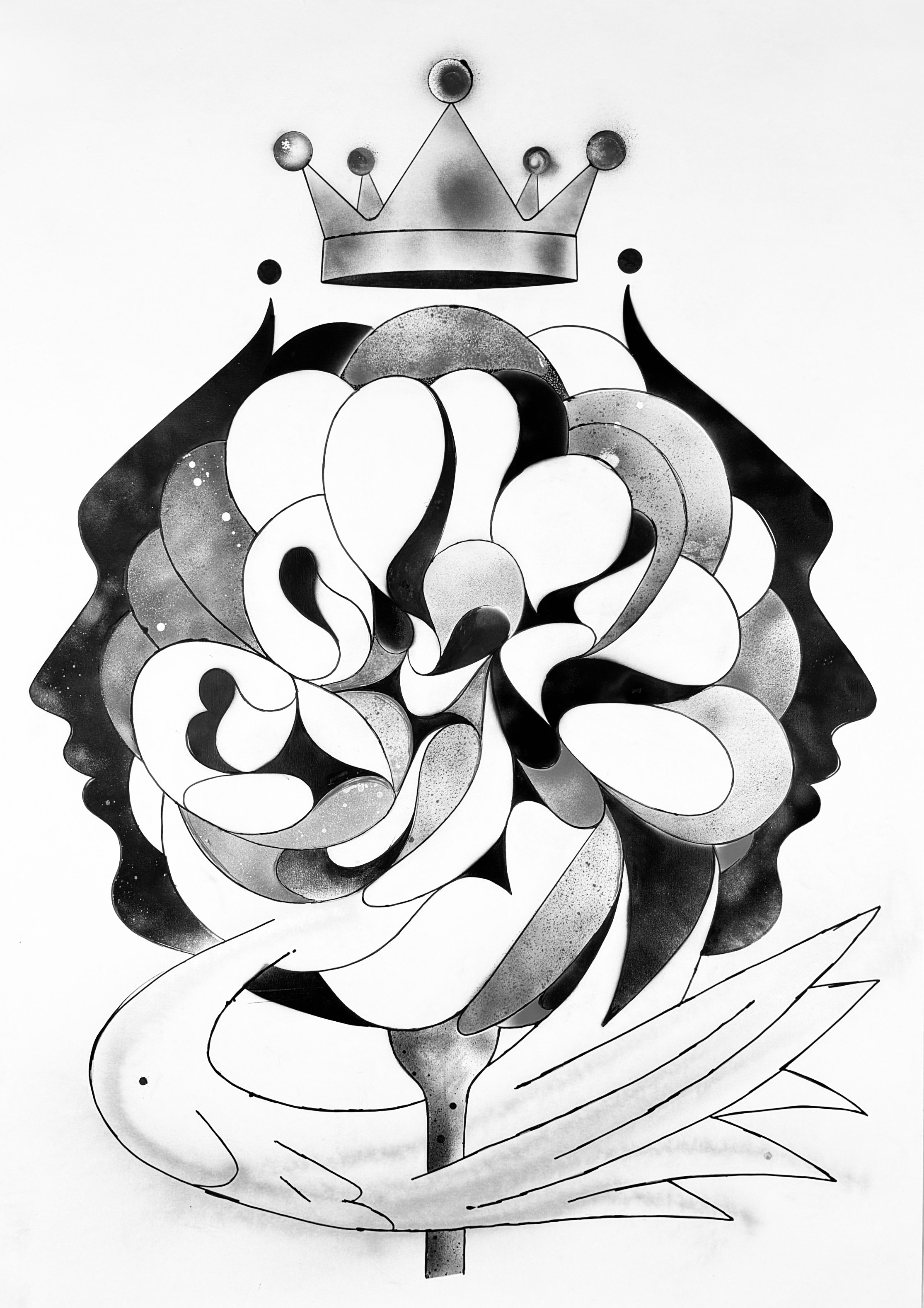
Glasgow Rose - CRM
A Scottish Art Dialogue
By Scott Kilgour
The Glasgow Art Club, October 2026
185 Bath Street, Glasgow, G2 4HU
This SITE-SPECIFIC EXHIBITION AT THE GLASGOW ART CLUB is the culmination and celebration of a visual conversation that began in NYC after relocating from Glasgow in 1983. It’s my ART DIALOGUE with Scotland from the vantage point of being a displaced artist thinking about two formative moments in Scottish culture. On the one hand, there’s the symbolic world of the PICTISH CROSS-SLAB STONES created in the medieval Middle Ages between 600 and 900 AD. On the other, the emergence of the GLASGOW STYLE during the late Victorian Era in the 1890s.
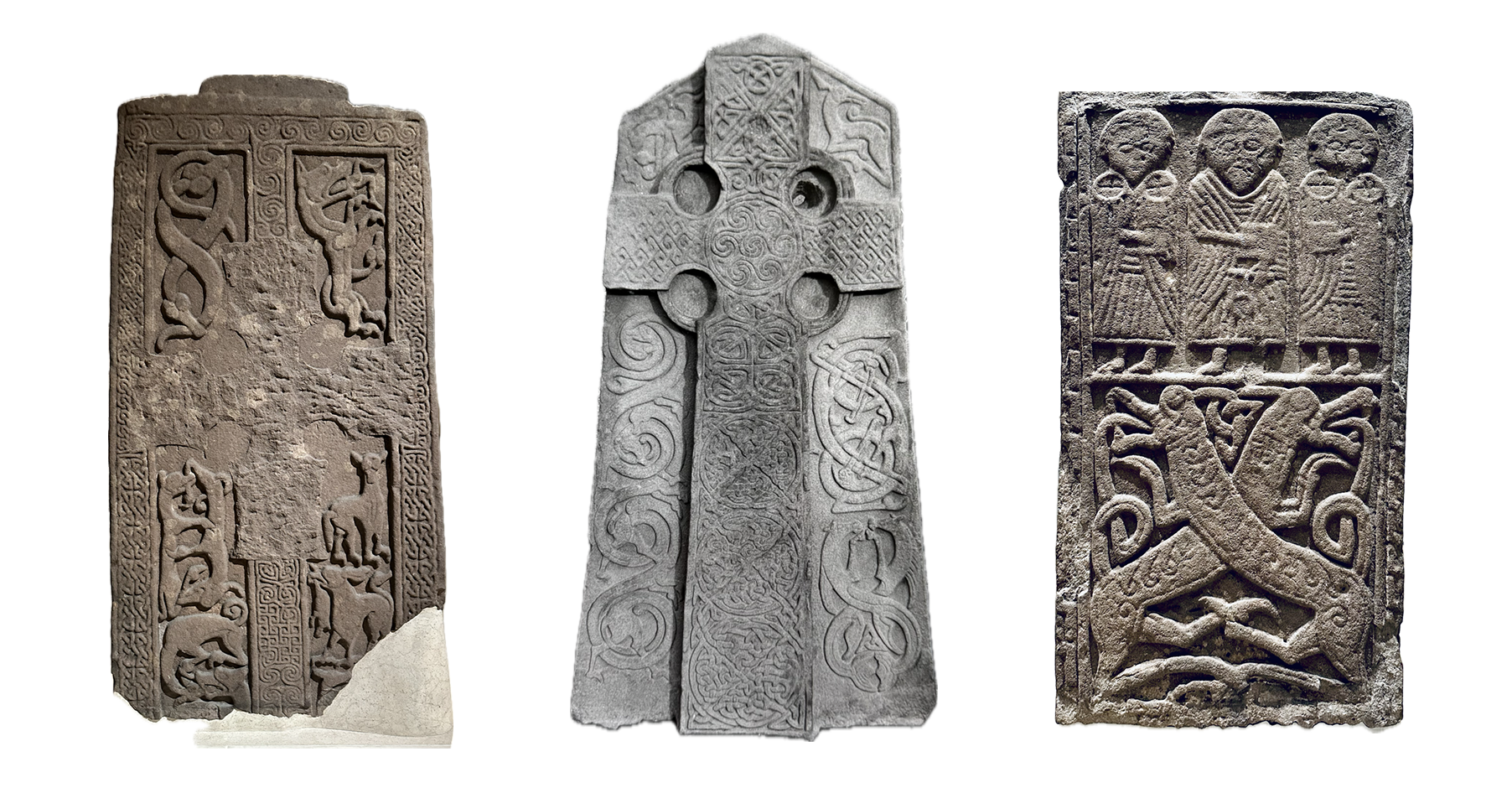
PICTISH CROSS-SLAB STONES – In the late 1990s, I met the noted Scottish anthropologist, Anthony Jackson. He generously gave me his book Pictish Symbol Stones – A Study of Pictish Society and its Symbolic Culture. Jackson proposed a compelling interpretation of the relationship between the Picts and the Scots. That the Picts were pagan Celts and the Scots were Christian Celts. For a 300-year period the Pictish symbol stones became in effect the “swan-song” – a social document carved in stone recording the gradual transformation and eventual eradication of Pictish society by 843 AD.
The stones are examples of culture transformation – their surfaces record the gradual replacement of one world view by another. The name Picts itself derives from the Roman term – Picti- “THE PAINTED ONES” referring to the tattooed bodies of the northern tribes who fought Romans from around 80AD onward. Yet despite centuries of resistance against imperial Rome, it was ultimately the arrival of the Irish Scots and Christianity – a force the Picts could not fully anticipate – that delivered the final deathblow to Pictish Society. The result of this assimilation was the creation of the kingdom of Alba, the birth of the future Scotland.
GLASGOW STYLE – Against this ancient backdrop stands the Glasgow Style. A late Victorian moment where another Scottish identify was imagined through an ornamental visual language – Charles Rennie Mackintosh, Margaret MacDonald, Herbert MacNair, Frances MacDonald. Collectively known as THE FOUR, they collaborated over a twenty-year period during the late Victorian Era starting in the late 1890s. Within this framework, this long arc through time, two flowers bloomed from different soils, yet seemed destined to intertwine.
The ancient SCOTTISH THISTLE, adopted as the national emblem of Scotland during the high middle ages of the 12th century becomes an important bridge between these two periods. The thistle carries associations of resilience, protection and endurance.
With Mackintosh the thistle undergoes a radical metamorphosis stylized into a linear decorative system abstracted into rhythm and geometry. This stylized thistle forms the principle motif of the stencil frieze that encircles the gallery of the GLASGOW ART CLUB, an interior he designed in 1892. This frieze is important within the context of the exhibition because it demonstrates how ornament can function within an architectural setting as both symbol and cultural memory.
The thistle ceases to be merely botanical. It becomes thought translated into decorative form. Alongside the thistle stands the GLASGOW ROSE – perhaps the defining emblem of the Glasgow Style. Unlike the defensive symbolism of the thistle the rose operates within a more introspective and psychological realm shaped by a form of romantic symbolism.
One of the most important manifestations of this vision was the rose boudoir – a room unified entirely by the motif of the rose created in Turin 1902 by The Four for the first international exhibition of modern decorative art. Within these works, the ROSE BECOMES ANIMATED THOUGHT – emotional states transformed into works of art. Titles such as “The Secret of the Rose,” “The Dreaming Rose,” and “The Awakening Rose,” suggest a symbolic interior world shaped by memory, desire, spirituality and love.
The ROSES emerge not simply from design theory – their imagery appears haunted and visionary and seems not to grow from nature, but from consciousness itself. An important dimension to this Glaswegian emergence was Fra Newbery, Director at the Glasgow School of Art between 1885 and 1917. Under his leadership the school developed an international reputation and helped the Glasgow Style flourish. Newbury emphasized LINE DRAWING AS A FOUNDATIONAL SKILL not only for fine artists, but also for industrial designers. Drawing was not merely a technical exercise but a mode of thinking that has a direct engagement with form. This emphasis on drawing is fundamental to the understanding of the work of The Four. Their mastery of line, stylization and symbolic reduction emerged from hand drawing practice which cultivated their imaginations.
NYC GRAPHIC SENSIBILITY - This combination of Medieval symbolism, Proto-Modernist abstraction and NYC graphic sensibility creates an intersection between different historical visual worlds – ancient stone carving and art nouveau design are brought together into a contemporary context where older streams of thought evolve into new forms.
This exhibition is not simply about history – it’s about continuity through transformation. The long arc of SCOTTISH IMAGINATION is ultimately about abstract symbolism and synthesis which Charles Rennie Mackintosh describes best in his statement, “Art is the flower – life is the green leaf – let every artist strive to make his flower a beautiful living thing. You must offer the flowers of the art that is in you – flowers that will often change a colorful, fearless life – into an animated thoughtful thing.”
EXHIBITION CONTENT: The stylized stenciled thistle frieze that encircles the Glasgow Art Club became a starting point for a new body of work. I began making paintings based on the thistle motif and connected with Mackintosh and The Four from an abstract symbolic perspective.
Four large angel paintings each carrying a single thistle – two at each end of the gallery – are figures that float in space as if they are guardians of the exhibition. Thes hang at both ends of the gallery.
Four Glasgow Rose paintings dedicated to The Four – using the Rose as an emblematic symbol of the Glasgow Style itself. These are in the center of the gallery space.
Two paintings of sleeping princesses – dedicated to Margaret and Frances MacDonald – as a tribute to their extraordinary contributions to the Glasgow Style.
Four paintings – one in each corner of the gallery – use Pictish symbol stones in a contemporary format.
The final group of four images combines Pictish symbols with the thistle itself, uniting two different expressions of Scottish identity into a single visual field.
I would like to acknowledge and thank Anthony Jackson for his invaluable insights into Pictish art and symbolism, and Roger Billcliffe, whose book Charles Rennie Mackintosh and the Art of The Four, became the final piece of the jigsaw puzzle that I had been searching for. Through his book I finally found closure in a conversation that had remained open for more than four decades.